
Public Safety Video Walls
Executive Summary
- Public safety organizations described using video wall systems as centralized interfaces for real-time decision-making, situational awareness, and multi-source information display in operational centers such as Real-Time Crime Centers (RTCCs) and Emergency Operations Centers (EOCs).
- Implementations highlighted aggregation of heterogeneous inputs—camera networks, specialized monitoring software, social media, mobile devices, and policing tools—into shared visual workspaces that support incident command and interagency coordination.
- One deployment was tied to a specific event-driven readiness requirement (hosting the 2016 Republican National Convention), while another emphasized ongoing countywide collaboration and operational workflows such as virtual backup and community transparency activities.
Key Industry Developments
- RTCCs positioned as central information hubs for operational decisions
- Cobb County’s RTCC is described as “a central hub for information supporting real-time decision-making,” with a video wall used to present multiple operational data sources in a single shared view.
- The RTCC environment is framed around supporting commanders and incident management teams with “comprehensive views to enhance situational awareness” during event management.
- Video wall deployments described as structured implementation efforts
- Cobb County’s implementation is characterized as a “journey” involving “conceptualization, planning, and collaboration” to deploy video wall technology in the RTCC.
- Technical configuration details for an EOC video wall and its operational scope
- Cleveland’s EOC video wall is specified as an 8×2 arrangement consisting of 16 55” LCD display monitors, each rated 24/7 and equipped with independent power supplies.
- With the video wall solution in place, the EOC can access and display video feeds from over 1500 city cameras in real-time, expanding beyond an earlier setup described as limited to two screens with rear projectors and a modest number of camera feeds.
- Multi-room distribution and multi-format ingestion as part of the workflow
- Cleveland’s system is connected across multiple spaces: the EOC, an executive conference room, and the Joint Information Center (JIC), enabling synchronized viewing and coordination across operational and communications teams.
- The system can ingest content from specialized monitoring software (WebEOC and Milestones), as well as social media, cable tuners, and iPhones, indicating support for mixed source types and operational dashboards alongside video.
Real-World Use Cases
- Cobb County RTCC: precision policing tools and live officer video
- The RTCC video wall content includes local news networks, Flock License Plate Readers (LPRs), and Fusus, combining public information, vehicle identification tooling, and platform-based feeds into a single display environment.
- Operational workflows include tracking vehicles on a custom hot list and identifying stolen vehicles using Flock LPRs, with requested video wall displays used to provide incident commanders rapid access to essential information.
- The RTCC provides live streams from body cameras and dash cameras and supports virtual backup capabilities, with the stated purpose of verifying officer safety and reducing unnecessary backup calls.
- The RTCC conducts community tours to educate stakeholders about RTCC technology and promote transparency.
- Cleveland EOC: large-scale camera access and partner collaboration
- The EOC functions as a command post for major planned and unplanned events, using the video wall to support real-time collaboration and monitoring.
- The video wall enables real-time display of feeds from over 1500 city cameras, supporting broad situational awareness across the city camera network.
- Partners can share surveillance and operational video by plugging laptops into the system, including inputs for drone operations and helicopter downlink, extending the wall beyond fixed infrastructure feeds.
- The system’s ingestion of WebEOC and Milestones alongside social media and mobile device inputs supports a workflow where incident information, operational coordination tools, and video can be viewed together.
Why It Matters
- Operational decision-making benefits from consolidated, multi-source visibility
- Both the RTCC and EOC examples describe environments where decision-makers rely on consolidated displays to obtain comprehensive views, supporting situational awareness and coordinated response during events and incidents.
- Scale and reliability characteristics are explicitly tied to public safety operations
- Cleveland’s specified 24/7-rated monitors and independent power supplies reflect design choices aligned with continuous operations, while the ability to display over 1500 camera feeds indicates the scale of surveillance integration that an EOC may require.
- Interagency and cross-functional coordination is supported by shared visual infrastructure
- Cobb County describes collaboration with six agencies within the county for resource and intelligence sharing, while Cleveland’s system connectivity across the EOC, executive conference room, and JIC supports coordination among operational leadership and information dissemination functions.
- Live field video and virtual support workflows can change how staffing and backup are managed
- Cobb County’s use of live body camera and dash camera streams for officer safety verification and reduced unnecessary backup calls illustrates how real-time video access can support operational triage and remote assistance models.
Sources
- https://www.haivision.com/case-studies/cobb-county/
- https://www.haivision.com/case-studies/cleveland-department-public-safety/
Related News
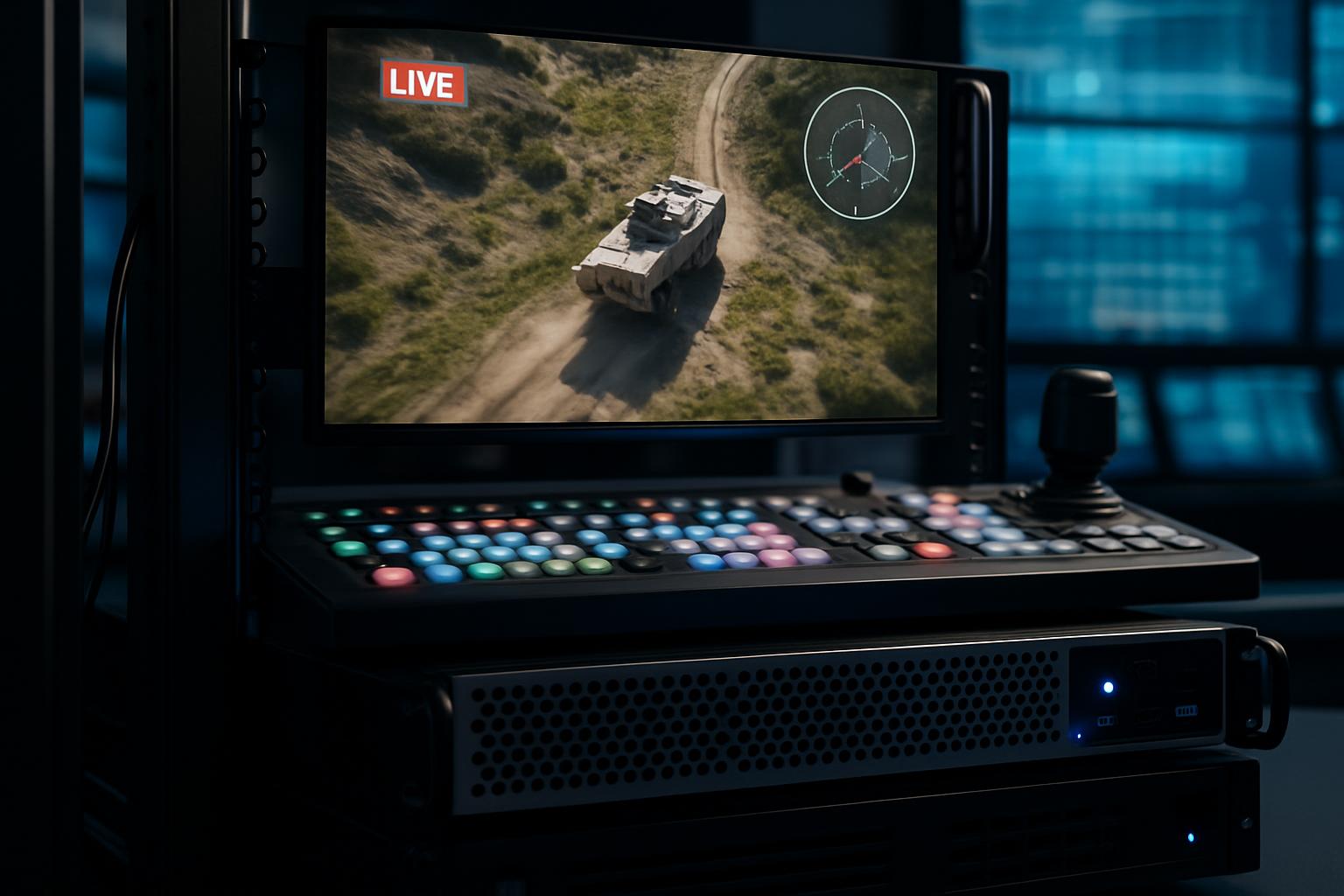
Haivision Adds Live Video to TAK Enhancing ISR
Live Video in TAK - Haivision describes the use of Tactical Assault Kit (TAK) operations in defense, public safety, and ISR contexts, with an emphasis on live video as...
Read More →
Bridge Technologies and Heynen expand IP monitoring for production visibility
Bridge Technologies described an expanded partnership with Heynen in the Netherlands, moving from a reseller agreement to a broader Business Partner collaboration. The...
Read More →
MediaKind Akamai Plan World Cup Streaming Capacity
MediaKind described operational and workflow considerations for large-scale live streaming tied to the 2026 World Cup, including concurrency, event volume, and deliver...
Read More →