← Back to News
MediaKind AI-Optimized Encoding Enables Global Sports Monetization
Published on March 30, 2026
Live Sports Streaming Workflows
Executive Summary
- Live sports streaming and monetization at global scale is described as a combined technical and commercial problem, spanning ultra-low-latency delivery, encoding performance, and packaging offers for different fan segments.
- Live sports workflows are characterized by unpredictable scale and tight processing windows, including “encoding fast-moving video in milliseconds” while maintaining delivery performance.
- Multiview experiences can be integrated into existing viewer environments using server-side rendering and API-driven configuration, enabling multiple concurrent game streams without requiring app updates.
Key Industry Developments
- MediaKind and Evergent leadership discussed approaches to streaming and monetizing live sports “at global scale,” framing the domain as one where delivery, encoding, and monetization mechanics must operate together under real-time constraints.
- Ultra-low-latency delivery is presented as a core requirement for live sports, alongside the operational challenge of scaling for real-time events with unpredictable audience demand.
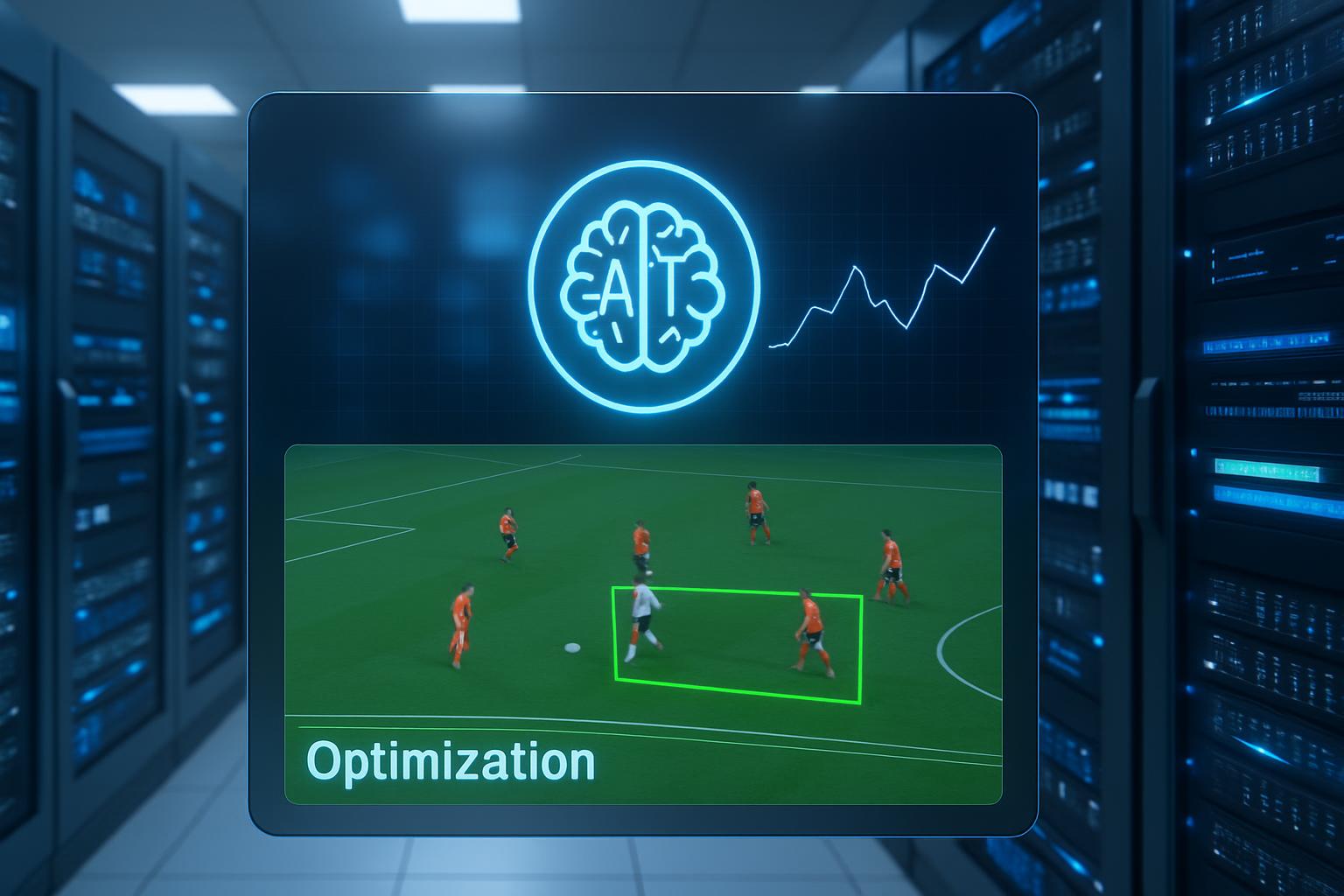
- MediaKind describes using AI to optimize encoding for specific sports, naming golf and basketball as examples, with the stated goals of reducing compute costs and improving stream quality.
- A domain-specific cloud strategy is described as necessary for scaling real-time events, with “predictive” planning called out as part of the approach.
Real-World Use Cases
- Multiview for tournament viewing: MK.IO Multiview powered a March Madness multiview experience for Comcast Xfinity viewers, enabling fans to stream up to four games at once.
- Integration workflow for multiview: MK.IO Multiview is described as “available now via a simple API” and uses server-side rendering for app integration, positioning multiview as a service that can be added without requiring app updates and without device limitations.
- Monetization surfaces inside live sports: Examples of monetization approaches include dynamic ad placements, with a specific example of ads on hockey rink backboards, and “fan-specific game packages” as an offer design pattern.
- Lifecycle value extensions: Additional approaches mentioned include upscaling historic games with AI, allowing fans to pause subscriptions off-season, and triggering purchases from social highlight clips as part of a broader engagement-to-commerce workflow.
Why It Matters
- Live sports places strict constraints on video processing and delivery: fast-moving content must be encoded within millisecond-level windows while meeting ultra-low-latency expectations, which directly impacts infrastructure sizing and operational design.
- AI-driven, sport-specific encoding optimization is positioned as a lever for both cost control (compute reduction) and viewer experience (stream quality), implying that encoding strategy can be tuned by content type rather than treated as one-size-fits-all.
- API-based multiview with server-side rendering supports rapid productization inside existing distribution environments, enabling multi-game viewing without forcing client updates or restricting device classes.
- Monetization and packaging mechanisms (dynamic ad placement and fan-specific packages) are described alongside delivery and encoding requirements, indicating that revenue workflows are being designed to operate in real time within the live stream experience.
Sources
- https://www.mediakind.com/blog/how-mediakind-and-evergent-are-redefining-live-sports-streaming/
- https://www.mediakind.com/blog/reimagining-march-madness-multiview-in-action/
Related News
Haivision Adds Live Video to TAK Enhancing ISR
Live Video in TAK - Haivision describes the use of Tactical Assault Kit (TAK) operations in defense, public safety, and ISR contexts, with an emphasis on live video as...
Read More →
Bridge Technologies and Heynen expand IP monitoring for production visibility
Bridge Technologies described an expanded partnership with Heynen in the Netherlands, moving from a reseller agreement to a broader Business Partner collaboration. The...
Read More →
MediaKind Akamai Plan World Cup Streaming Capacity
MediaKind described operational and workflow considerations for large-scale live streaming tied to the 2026 World Cup, including concurrency, event volume, and deliver...
Read More →