← Back to News
MediaKind MK.IO API-First Platform Enables Scalable D2C Streaming
Published on April 3, 2026
MK.IO Streaming Workflows
Executive Summary
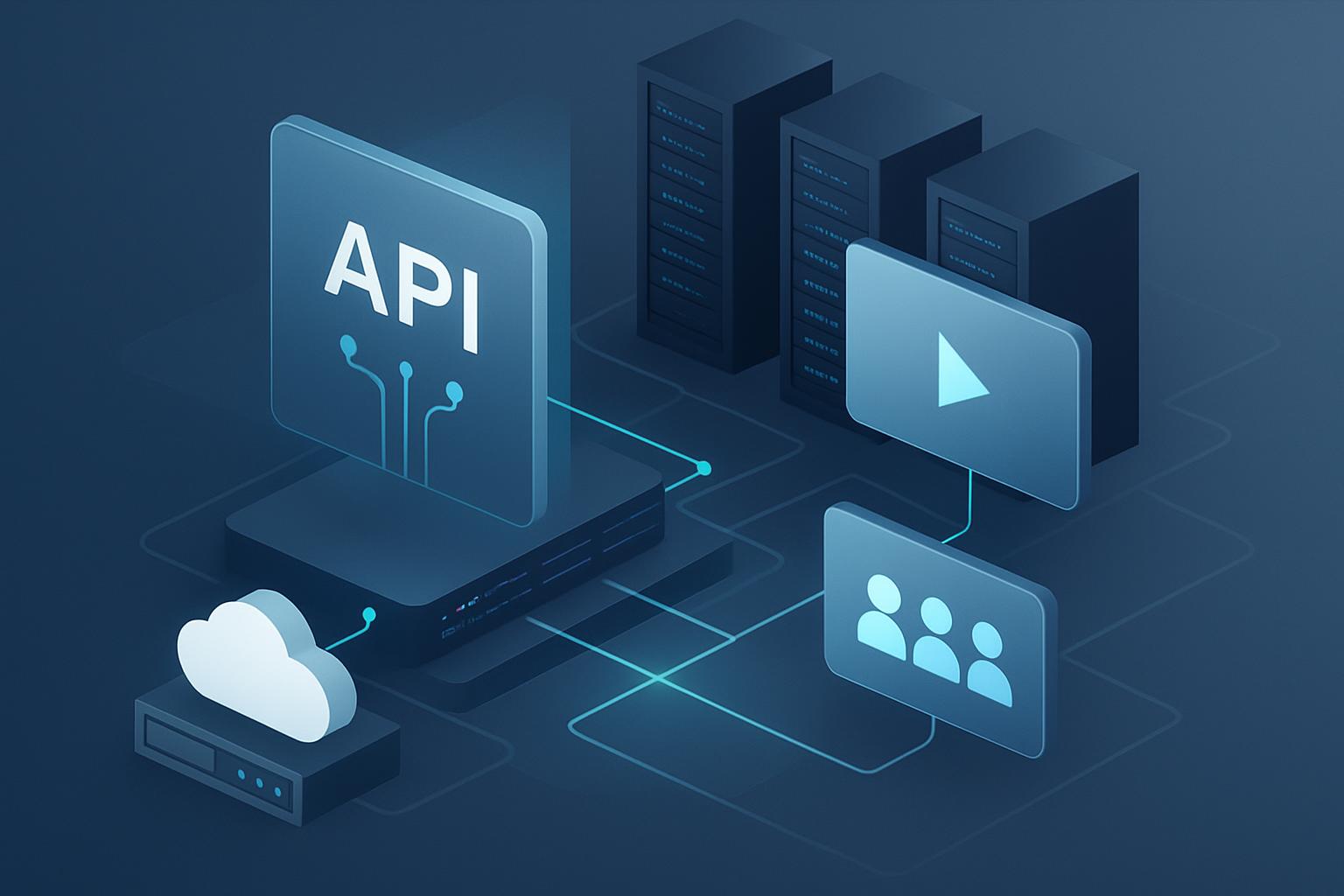
- MediaKind positions MK.IO as an API-first platform for building streaming workflows that span ingest through delivery, supporting both live and on-demand streaming.
- MK.IO is described as deployable across AWS, Azure, or customer infrastructure, aligning the same workflow model to multiple hosting environments.
- MediaKind also describes MK.IO Platform as an all-in-one direct-to-consumer (D2C) streaming solution designed to scale to large audiences, including peak traffic surges.
Key Industry Developments
- API-first streaming workflow construction
- MK.IO is described as enabling teams to manage an end-to-end video workflow “from ingest to delivery” through a single platform, with integration via APIs and supporting materials such as documentation, API references, and SDKs.
- The platform positioning emphasizes developer integration for delivery and monetization-related capabilities through “simple, developer-friendly APIs,” including global delivery, ultra-low latency, DRM, and dynamic ad insertion.
- Multi-environment deployment options
- MK.IO is described as deployable on AWS, Azure, or customer infrastructure, indicating support for cloud and self-managed deployment models under a common workflow approach.
- Metered pricing model for variable workloads
- MK.IO is described as offering metered pricing with “no upfront commitment” and “no hidden fees,” framing a consumption-based approach intended to scale up or down with demand.
- D2C platform capabilities for access models and protection
- MK.IO Platform is described as supporting multiple access models—subscriptions, free trials, and ad-supported access—while also including entitlement management and content protection controls such as geo-blocking, VPN detection, and anti-piracy tools.
- Operationally, MK.IO Platform is described as being supported by a team that “develops, deploys, and monitors the core technology—24/7,” indicating a managed-service posture around the core streaming stack.
Real-World Use Cases
- Building end-to-end streaming workflows (ingest to delivery)
- MK.IO is described as supporting workflow construction across the full chain—from ingest through delivery—using an API-first approach intended for integration into applications and services.
- The same workflow framing is presented as applicable to both live and on-demand streaming, enabling teams to launch live streaming experiences and on-demand experiences using the same platform foundation.
- Integrating delivery performance and latency features
- MK.IO is described as supporting global video delivery and ultra-low latency as integrable capabilities via APIs, allowing developers to incorporate these characteristics into their streaming delivery workflows.
- Applying content protection and monetization controls
- MK.IO is described as supporting DRM and dynamic ad insertion as API-integrated features, enabling protected playback and ad insertion within delivery workflows.
- MK.IO Platform is described as including entitlement management and anti-piracy controls (geo-blocking, VPN detection, and anti-piracy tools) as built-in platform capabilities for protecting premium content in D2C scenarios.
- Deploying streaming stacks across cloud or customer infrastructure
- MK.IO is described as deployable on AWS, Azure, or customer infrastructure, supporting use cases where organizations standardize workflows while choosing different hosting environments.
Why It Matters
- Workflow consolidation and integration surface
- An API-first model that spans ingest to delivery can reduce the number of separate systems developers must stitch together, because the workflow is described as manageable through a single platform with APIs and supporting integration assets (documentation, API references, SDKs).
- Operational flexibility for scaling and deployment
- Metered pricing with no upfront commitment is positioned to align cost with usage variability, which can matter for teams facing unpredictable workloads.
- Deployment options across AWS, Azure, or customer infrastructure can matter for organizations with differing compliance, latency, or operational requirements, while keeping the same platform approach.
- D2C readiness: access models, protection, and support
- A D2C platform that supports subscriptions, free trials, and ad-supported access provides multiple business model configurations without requiring separate backend systems for each access type.
- Built-in entitlement management, geo-blocking, VPN detection, and anti-piracy tools can matter for premium content distribution where access enforcement and piracy mitigation are operational requirements.
- 24/7 development, deployment, and monitoring support can matter for services that require continuous operational coverage for the core streaming technology.
Sources
- https://www.mediakind.com/mkio/
- https://www.mediakind.com/mkio-platform/
Related News
Haivision Adds Live Video to TAK Enhancing ISR
Live Video in TAK - Haivision describes the use of Tactical Assault Kit (TAK) operations in defense, public safety, and ISR contexts, with an emphasis on live video as...
Read More →
Bridge Technologies and Heynen expand IP monitoring for production visibility
Bridge Technologies described an expanded partnership with Heynen in the Netherlands, moving from a reseller agreement to a broader Business Partner collaboration. The...
Read More →
MediaKind Akamai Plan World Cup Streaming Capacity
MediaKind described operational and workflow considerations for large-scale live streaming tied to the 2026 World Cup, including concurrency, event volume, and deliver...
Read More →